Search This Blog

Tuesday, November 30, 2010

Take Me To... (Dun Dun Dun) THE MONKEY BLOCK (Gasp!)


Plot

"The Minority Report", a short story by Philip K. Dick, encapsulates a very rare breed plot development.  The reader is immediately immersed into the action as the story begins with the founder of Precrime conversing with an agent about what his life's work is all about and how his unique system is run (p. 119-123).  This information serves as a basis for what the reader understands about the main characters and the Precrime system in general.  As the story continues, Dick does a phenomenal job of keeping the reader guessing.  Many times I found myself questioning who the good guys and bad guys really were.  A sort of tug-of-war takes place in which the reader never knows who to trust or who to side with.  Overall, the story has a very engaging plot that keeps the reader engaged and always guessing.

Point of View

This literary work is written in the third person omniscient in which the story is told from an all-knowing outside source that can not only interpret the words and actions of the characters, but their internal thoughts and feelings as well.  The use of this narrative mode helps the reader to fully understand what the characters are truly thinking.  In the opening line of the short narrative, the thoughts of the main character, Ed Anderton, are referenced to express his thoughts on his aging condition. He says, "I'm getting bald.  Bald and fat and old" (p. 119).  This internal information helps to paint a better picture of not only the physical attributes of Anderton, but also his mental stability and rationalization of the need to find a replacement.  The ability to comprehend the thoughts of the character throughout the work allowed the author, Philip K. Dick, to fully explain and get his point across in a relatively short time span and word count.  The use of the third person omniscient point of view was an instrumental part to the delivery of the short story.

Characterization

Indirect characterization is riddled throughout the entirety of the short story.  Dick never came out and told the reader that a character was bad or that they were out to get another character.  This fact made "The Minority Report" everything that is boasted to be.  The use of indirect characterization gave the literary work a sense of mystery and essentially fueled the story.  If the reader were to know, right off the bat, who was bad, who was good, and what every character truly intended to do, there would not be a story, but rather just a retelling of events.  The reader has to concoct their own views and opinions on what kind of person each character appeared to be, creating a sort of "who done it?" atmosphere.  A prime example of this uncertainty of actual characterization came to me when Tod Flemming, a man I thought to be on Ed Anderton side the entire time, ended up being a spy who was trying to control the Andertons (p. 141).

Setting

The setting of the short literary work plays a very vital role the legitimacy of the story.  "The Minority Report" is set in the future where space ships (p. 137-141), travel to extraterrestrial planets (p. 149-151), and the ability to predict crimes before they happen are all a reality (p. 120-122).  This future reality allows the reader to consider the possibility that the use of Precrime could actually one day exist.  Personally, stepping into the future is one of my favorite settings because virtually anything is impossible.  This fact allows for limitless creativity on the author's part and boundless extents for one's imagination.  In the end, the futuristic setting allows the reader to expect the unexpected and the author to run free with creativity.

Theme

The major theme expressed in the literary work are fate and deception.  In the first section of the story, Anderton receives his fate to murder a man that he had never even met (p. 122-123).  He then continues, throughout the story, to try to prevent his fate from occurring.  In the end, he finds out that the very act he was trying to keep himself from doing must be done to preserve the validity of the the Precrime Initiative.  Deception is also a prominent theme in the story.  Anderton is deceived by numerous people including Kaplan, the man he was fated to kill.  Kaplan played Anderton to make him seem innocent and  as if he was only trying to protect himself from his future murder but he; however, had much bigger plans.  Kaplan's real intent was to bring down the Precrime movement and deny it's validity, but as he attempted to disprove the system, he completed the exact opposite as Anderton murdered him in the presence hundreds of people (p. 149).


Tuesday, October 26, 2010

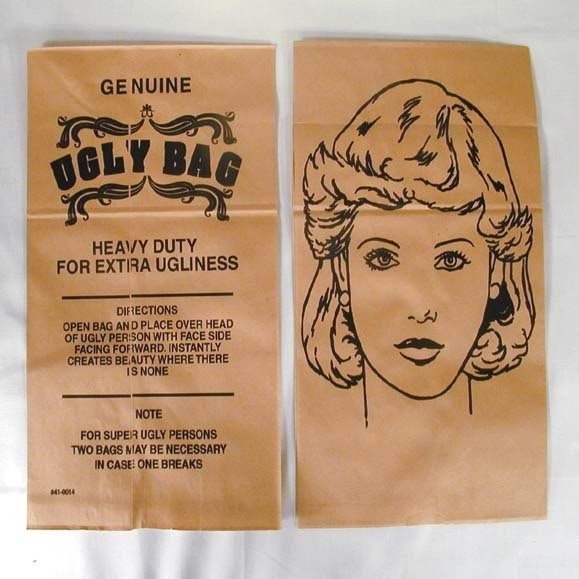
Billy Shakes Thinks She's Ugly


Sonnet 130

  1. My mistress' eyes are nothing like the sun;
  2. Coral is far more red, than her lips red:
  3. If snow be white, why then her breasts are dun;
  4. If hairs be wires, black wires grow on her head.
  5. I have seen roses damasked, red and white,
  6. But no such roses see I in her cheeks;
  7. And in some perfumes is there more delight
  8. Than in the breath that from my mistress reeks.
  9. I love to hear her speak, yet well I know
  10. That music hath a far more pleasing sound:
  11. I grant I never saw a goddess go,
  12. My mistress, when she walks, treads on the ground:
  13. And yet by heaven, I think my love as rare,
  14. As any she belied with false compare.


In William Shakespeare's Sonnet 130, a man verbalizes his displeasures with his mistress.  He begins by stating the physical attributes with which he finds fault with in the first six lines of the sonnet.  The man finds his mistress's eyes to be dull and ugly, unlike the sun, her lips to be far less beautiful that coral, her breasts to be a muddy-looking color rather than white, her hair to be black and wiry, and her cheeks to be lacking in color.  The man then comments on the mistress's unfavorable odor.  He states in lines seven and eight, how her breath smells terrible in comparison to wonderful perfumes.  Then, in lines nine and ten the speaker comments on his mistress's voice by expressing how he feels that her voice is not as beautiful as music.  The man also compares his mistress to a goddess and says she walks on the ground unlike a goddess.  In the end, he realizes that behind all of the faults he finds in his mistress, he believes that the love he shares with her is truly genuine and she is falsely represented by her unfavorable characteristics.
Sonnet 130 is a fair representation of how many people in today's world operate.  If one is not shallow, then they can look past the imperfections that a person might have and look inside to see who they really are.  I, myself, try to get to know someone for who they really are before I attempt to judge them.  The movie "Shallow Hal" depicts a man who only wants to date women for how the look on the outside rather than on the inside, until someone casts a spell on him.  Once the spell is casted, Hal only sees women for what they are on the inside, which leads to him falling in love with a girl he would not normally fall for.  To judge a person by how the look or what they wear is not fair to them or oneself.  By prejudging a them, one blocks themselves out from getting to know a potentially great person.  One must learn to allow oneself to look past the flaws that everyone has and just accept each person for who they are, just as the man in the sonnet did.

Sunday, September 26, 2010

19th Century Ballerinas & Used Superstitions

Hand Me Down Luck - I Call Fives
Keep asking questions and you might get some answers
I assure you it's not easy
This was just a disaster
But that's just what you'll get
When you put your faith in me
I'm sure you all would agree
That almost everything I've ever said
Was just to bring the conversation in a better direction
That's all I've got
And I've been hanging by a thread

I don't want to remember
Every chance I get, I fail
I don't want to remember

So here's the thing
I wouldn't wish my luck on anybody else
And I've been trying to change for three years
But every time I attempt, things go to hell
Now in the past three years
I've made some mistakes that I regret today
Now it's time to change
Cause everything I want is only a step away

I don't want to remember
Every chance I get, I fail
I don't want to remember

Two, three, four
I don't want to remember
Every chance I get, I fail
I don't want to remember

Typical ballads usually fall into one of four categories.  Among those categories is the feeling of unrequited love in a character.  In the song "Hand Me Down Luck" by I Call Fives, the speaker expresses their feelings that they once shared with someone and how those feelings are not shared anymore.  This song exhibits a number of characteristics that are found in many common Folk Ballads.  The lyrics of the song dramatizes a single incident; whereas, the story within the song begins abruptly without much given information about the past experience.  There is dialogue or questions and answers that further the story within the song that illustrate how the speaker wants their questions answered and then goes on to list their problems.  There is a strong, simple beat and an uncomplicated rhyme scheme or pattern used in the musical work, for it is quite short and simple with  the use of refrain, repeated regularly throughout the ballad at the end of a stanza to emphasize ideas and add to the musical quality of the verses.  Finally, this work is based on actual events that occurred earlier in the speaker's life, which they regret.  "Hand Me Down Luck" is a musical work that accurately reflects the traditional folk ballad.  With many of the typical characteristics present within the lyrics of the song, the use of one's imagination can be exercised in a simplistic way to make the song mean something special.

Tuesday, August 24, 2010

Hard Work, Scorched Skin, and Voice Alteration


Personal Heros are somewhat overlooked in one's everyday life because a person can easily take them for granted.  It wasn't until I began writing this blog that I realized that my personal hero is my dad.  If I were to sum up my old man in one word it would be hardworking.  Almost every day, he goes out and works in the blistering hot Indiana summers, the bone chilling Indiana winters, and anywhere in between.  His job is far from glamorous, but he does it for his family, so my sister and I can have a Catholic education and lead a successful life.  Something that stuck with me was when I asked my dad why he made the decision to spend so much money to send me to a Catholic school for so many years; his response was, "So you don't have to spend the rest of your life doing what I have to do."  If that isn't anything short of a hero, then I don't know what is.


Popular Heros are numerous, but not always recognized.  Firefighters are extremely courageous and it's sometimes not realized until one's own life is saved by one of those men or women.  Some may think the only reason a person becomes a firefighter is because of the pay and I'm sure that's true for some firefighters, but most certainly not all of them.  To be able to run into a burning building with nothing but a few layers of clothing and oxygen tank to keep them alive takes a special type of person.  They go into work fully knowing the severe risk that they are taking, but they do it anyway.  When they run into a burning building I imagine them not thinking I might die, but rather I might just save someone's life.  Firefighters define what it is to be a true hero.


Literary Heros usually have some sort of superhuman ability that is desired by the audience.  Batman; however, does not have such traits.  Bruce is just a normal guy (extreme wealth, buffness, and cat-like reflexes put aside) who attempts to save the lives of the innocent people of Gotham City from a wide array of ridiculously dressed psychopaths.  What makes Batman stand out is the fact that he isn't destined to protect the people because he has a superpower that would qualify him as a freak if he wasn't a superhero; he does it because it's simply the right thing to do.  He may say, "Gotham NEEDS Batman," but that's really just a cover up for "I like protecting the well-being and overall safety of the people of Gotham and really deep down inside, behind my fake manly voice, I'm just a soft-hearted guy".  Somehow that dialogue didn't fit so well into the Batman script.  In other words, Batman is selfless and genuinely cares about the people in his beloved Gotham City.